
What Are Virtual Field Trips? A Complete Guide for Teachers, Parents and Schools
Virtual field trips let a class explore anywhere — the pyramids, a coral reef, Roman Londinium or the surface of the Moon — without leaving the room. Here's what they are, how they work, their benefits, and how to run one well.
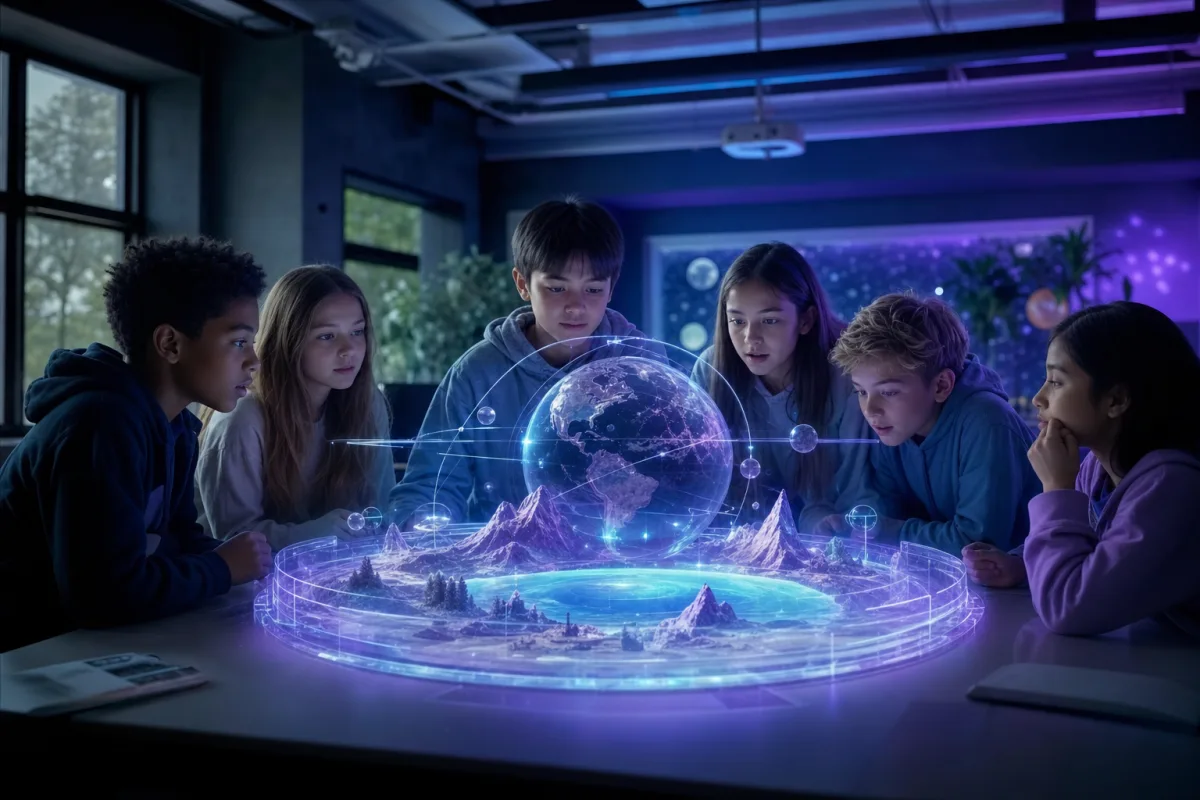
Key Takeaways
- A virtual field trip is an interactive 360° or VR journey to a place students explore from the classroom.
- They remove the cost, travel, safeguarding, weather and distance barriers of physical trips.
- The best trips are interactive and narrated, not just a video to watch passively.
- They can visit impossible places — the past, deep oceans, distant planets, inside the body.
- Any device works, from a class projector to a phone to a full VR headset — no specialist kit required.
School trips have always been one of the most memorable parts of education. Visiting museums, historical landmarks, nature reserves and famous cities gives students the chance to experience learning beyond the classroom.
Unfortunately, traditional field trips are not always practical. Costs, travel time, accessibility, staffing requirements and weather can all limit opportunities for educational visits.
Virtual field trips solve many of these challenges by allowing learners to explore incredible places from anywhere in the world using a computer, tablet, interactive whiteboard or virtual reality headset.
Whether you're visiting the Great Pyramid of Giza, diving beneath a coral reef, walking through Roman Londinium or standing on the surface of the Moon, virtual field trips bring education to life in ways that were unimaginable just a few years ago.
As immersive technology becomes more accessible, virtual field trips are becoming an increasingly valuable addition to modern classrooms. Research suggests they can improve engagement and contribute positively to learning outcomes when thoughtfully integrated into teaching (three-level meta-analytic review, 2025).
What is a virtual field trip?
A virtual field trip is an interactive educational experience that allows learners to explore real or digitally recreated locations without physically travelling there. Instead of boarding a coach, students use technology to visit destinations around the world from the classroom or at home.
Virtual field trips may include:
- Interactive 360° environments
- Virtual reality (VR)
- Guided audio narration
- Educational hotspots
- Videos and animations
- Images and historical reconstructions
- Interactive quizzes and activities
Unlike watching a standard educational video, learners are free to look around, explore their surroundings and investigate the areas that interest them. This creates a much stronger sense of presence and encourages active learning. See our full guide to immersive learning for the theory behind why exploring, rather than watching, changes how much students retain.
How do virtual field trips work?
Modern virtual field trips are designed to work across a wide range of devices. Students can access them using:
- Desktop computers
- Laptops
- Tablets
- Mobile phones
- Interactive classroom displays
- Meta Quest and other VR headsets
Many experiences use 360° panoramic environments, allowing learners to freely look in every direction while exploring locations. A typical trip is built from scenes you can look around, hotspots that reveal facts or move you onward, narration that explains what you're seeing, and questions that turn passive looking into active thinking.
Teachers can guide an entire class through the experience or allow students to investigate independently at their own pace.
Why are virtual field trips becoming so popular?
Schools face increasing pressure to deliver engaging lessons while managing limited budgets and busy timetables. Traditional educational visits often involve:
- Coach hire
- Admission costs
- Risk assessments
- Parent permissions
- Staffing ratios
- Long travel times
- Weather disruptions
Virtual field trips remove many of these barriers. Instead of travelling for several hours, an entire class can visit multiple countries or historical periods within a single lesson.
They also make experiences available to schools that might otherwise be unable to organise educational visits because of financial or accessibility constraints (the role of virtual field trips in geography education).
Benefits of virtual field trips
Bring learning to life
Students can experience places instead of simply reading about them. Rather than looking at photographs of Ancient Egypt, learners can picture themselves beside the pyramids. Instead of studying coral reefs from diagrams, they can explore vibrant underwater ecosystems. This makes lessons more memorable and engaging.
Increase student engagement
Interactive exploration naturally encourages curiosity. Students are no longer passive observers — they become active participants in the learning process. Studies have found immersive virtual field trips can increase enjoyment, interest and learners' sense of presence compared with traditional video-based instruction (the immersion principle in multimedia learning).
Accessible for every school
Because virtual field trips work on everyday devices, schools do not need specialist equipment to begin. A classroom computer and projector can deliver an engaging experience to an entire class, while VR headsets provide an even deeper level of immersion where available. They also include learners who can't attend physical trips — see immersive learning for SEND students.
Explore places that are impossible to visit
Some destinations simply cannot be visited in person. Students can explore:
- The International Space Station and the Solar System
- Ancient civilisations
- Deep ocean environments
- Volcanoes and the world's greatest waterfalls
- The Arctic and Earth's biomes
- Inside the human body
- Extinct prehistoric ecosystems
Virtual technology makes these experiences possible.
Learn at your own pace
Unlike physical trips, virtual experiences can be paused, revisited and explored multiple times. Teachers can stop to ask questions, encourage discussion or focus on specific learning objectives. Students can also revisit locations during revision or homework.
Virtual field trips across the curriculum
One of the greatest strengths of virtual field trips is their flexibility.
History
Travel back in time to witness some of history's most significant moments. Students might explore Ancient Egypt, Roman Londinium, medieval castles, the Battle of Britain, the Titanic, the Berlin Wall or Pompeii. Historical reconstructions help learners understand not only what happened but also where events took place. See teaching history with immersive worlds for lesson ideas.
Geography
Geography becomes far more engaging when students can explore landscapes first-hand. Virtual field trips let learners visit rainforests, deserts, mountains, rivers, volcanoes, waterfalls, polar regions and famous coastlines. These experiences support understanding of ecosystems, climate and physical geography.
Science
Science lessons become immersive through the Solar System, the human body, dinosaurs, ocean ecosystems, weather systems and animal habitats. Complex scientific concepts become easier to visualise when learners can explore them in three dimensions.
Art and culture
Students can visit museums, galleries and cultural landmarks around the world without leaving school. They can examine famous architecture, sculptures and artworks while learning about different societies and historical periods.
Virtual field trips vs traditional field trips
| Traditional field trip | Virtual field trip |
|---|---|
| Travel required | Accessible instantly |
| Weather dependent | Available year-round |
| Expensive | Cost-effective |
| One location | Unlimited destinations |
| Limited time | Explore at your own pace |
| Accessibility challenges | Accessible to many more learners |
Virtual field trips are not intended to replace real-world visits. Instead, they give schools additional opportunities to enrich learning, especially when physical travel is impractical.
Do students need a VR headset?
No. Although virtual reality headsets create the highest level of immersion, most virtual field trips work perfectly through a web browser on standard devices. Students can:
- Use a mouse or touchscreen to look around
- Explore with tablets or mobile phones
- View experiences on interactive whiteboards
- Enjoy fully immersive exploration with VR headsets where available
This flexibility allows schools to adopt immersive learning gradually. We cover the hardware question in full in do you need a VR headset? and compare the options in VR in the classroom.
How teachers can use virtual field trips
Virtual field trips can be integrated into lessons in many ways. For example:
- Introduce a new topic
- Reinforce classroom teaching
- Support revision
- Inspire creative writing
- Encourage group discussion
- Complete independent research projects
- Create cross-curricular learning opportunities
Teachers can pause experiences to ask questions, highlight important features or encourage learners to predict what they might discover next. Our step-by-step guide to planning a virtual field trip walks through a full lesson structure.
Why 360° experiences are ideal for education
One of the easiest ways to introduce immersive learning is through interactive 360° environments. Unlike fully interactive simulations, 360° experiences are:
- Simple to use
- Quick to load
- Compatible with most devices
- Easy for teachers to integrate into existing lessons
- Highly immersive without requiring complex controls
This makes them particularly suitable for primary schools, secondary schools and home education. Read more on how 360° video is transforming education.
How 360Worlds brings virtual field trips to life
360Worlds has been created to make immersive education accessible for schools, teachers and families. Every virtual world combines:
- Interactive 360° environments
- Educational hotspots
- Professional narration
- Multilingual audio
- VR compatibility
- Desktop, tablet and mobile support
Learners can explore a growing library of educational experiences covering history, geography, science, nature and culture. From walking through Roman Londinium and diving into the tropical oceans to exploring the Solar System and the human body, every experience is designed to spark curiosity and encourage exploration. For a curated starting point, see our roundup of the best virtual field trips for schools.
The future of educational exploration
Virtual field trips are changing the way students experience the world. By removing barriers of distance, cost and accessibility, they enable learners to visit extraordinary places, explore historical events and investigate scientific concepts without leaving the classroom.
When combined with effective teaching, virtual field trips can make lessons more engaging, memorable and inclusive. As immersive technology continues to evolve, they are likely to become an increasingly important part of education, giving every learner the opportunity to discover places and ideas that might otherwise remain out of reach (three-level meta-analytic review, 2025).
Ready to begin? Browse the full library of worlds, explore 360Worlds for schools, view plans and pricing, or book a school demo.
- #virtual field trips
- #immersive learning
- #vr in education
- #360 learning
- #edtech
- #classroom technology
Frequently Asked Questions

The 360Worlds Team
Immersive Learning Specialists
We build immersive educational worlds that let learners explore history, science, geography, space and nature through interactive 360° experiences.
Related Articles

How to Plan a Virtual Field Trip: A Step-by-Step Guide for Teachers
A simple, repeatable structure for planning a virtual field trip that teaches, not just entertains — from choosing a destination and setting objectives to running the lesson and the follow-up task that makes it stick.

11 Best Virtual Field Trips for Schools in 2026 (By Subject)
From Roman London to the surface of the deep ocean, here are eleven of the best virtual field trips for schools — what each one teaches, the subjects and year groups it suits, and activity ideas to make it land.

Immersive Learning Explained: What It Is, Why It Works and How It's Transforming Education
Immersive learning places students inside realistic digital environments — through VR, 360° worlds and interactive simulations — so they explore and discover rather than passively read. Here's what it is, why it works, and how to use it in any classroom.